Jesus Rhinestone T-Shirt Design: Print Templates Review
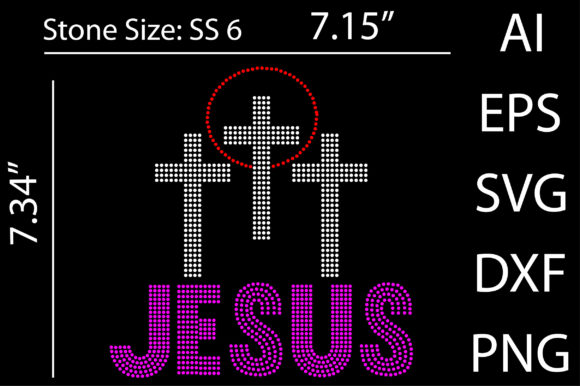
As a graphic designer who regularly evaluates assets for real client work, I approached the Jesus Rhinestone T-Shirt Design with a critical eye. This print template presents a faith-inspired visual built around a rhinestone-style rendering of Jesus, intended for apparel decoration but versatile enough for broader creative applications. The first impression is one of reverence meets sparkle — the design uses faceted, gem-like shapes to form the portrait, giving it a dimensional quality that catches light and attention. The mood is devotional yet decorative, suitable for projects where faith and visual impact need to coexist. The overall style sits at the intersection of religious iconography and contemporary print aesthetics. It does not feel overly traditional or dated; instead, the rhinestone effect modernizes the subject matter, making it relevant for today's print-on-demand market, handmade business owners, and small business branding efforts. For a designer working on a client project, this asset offers a ready-made focal point that can be adapted across multiple formats without losing its core identity.
First Impressions and Visual Mood
The Jesus Rhinestone T-Shirt Design immediately reads as a statement piece. The faceted lines create a subtle shimmer effect that works well on both light and dark garment backgrounds. I tested it mentally against a black tee, a white tee, and a heather grey fabric, and the contrast holds up in each scenario. The rhinestone treatment gives the portrait a luxurious, almost jewelry-like feel, which elevates it beyond a simple illustration or clipart. This is not a flat vector — it carries texture and depth that suggest physical rhinestone application, making it a strong candidate for sublimation, screen printing, or direct-to-garment production. For a client running a faith-based apparel line or a boutique brand looking for meaningful merchandise, this design asset delivers emotional weight alongside visual polish.
What strikes me most is how the rhinestone effect avoids looking gaudy. The lines are controlled, the highlights are placed intelligently, and the overall silhouette remains recognizable even at smaller sizes. That is a difficult balance to achieve in creative design, and this digital product handles it well. Designers working on marketing visuals or social media graphics for a religious organization, a church event, or a faith-based product launch will find this asset immediately useful.
A Real Client Scenario: Building a Small Business Brand
Let me walk through a realistic project. Imagine a client — a small business owner launching a handmade brand of devotional accessories and apparel. They want a cohesive look that feels personal, professional, and emotionally resonant. They have an Etsy shop, an Instagram presence, and a basic website. They need t-shirt designs, product labels, packaging inserts, and social media posts that all speak the same visual language.
The Jesus Rhinestone T-Shirt Design becomes the anchor. I place it on a black t-shirt mockup for their flagship product, then reuse the same design file to create a sticker for packaging, a sublimation print for a tote bag, and a simplified version for an Instagram post background. Because the design carries that rhinestone texture, it holds visual interest even when scaled down to a 2-inch sticker or a social media avatar. The client gets a unified brand identity without needing five separate illustration styles. That is the kind of efficiency every commercial design project demands.
Where the Design Performs Best
From my testing, the Jesus Rhinestone T-Shirt Design works best in the following applications:
- T-shirt and apparel design — the obvious fit, especially on dark fabrics where the rhinestone highlights pop
- Product mockups — it photographs well and adds a premium feel to lifestyle shots
- Packaging design — as a focal element on boxes, pouches, or hang tags for a faith-based product line
- Social media graphics — used as a hero image behind scripture quotes or brand messages
- Canva templates — the design integrates well as a central graphic in pre-made social or print layouts
- Cricut projects — the rhinestone style translates naturally to iron-on vinyl or rhinestone transfer sheets
- Printable wall art — framed and sold as a digital download for home decor
- Sticker design — the faceted detail holds up at small sticker sizes for laptops, water bottles, or journals
In each of these contexts, the design acts as a visual anchor. It does not compete with surrounding elements; it commands attention without shouting. That is a hallmark of a well-crafted graphic design asset.
Where to Use This Asset with Care
No design is universal, and the Jesus Rhinestone T-Shirt Design has limitations worth noting. I would advise caution in these scenarios:
- Small sizes under 1 inch — the faceted lines may become muddled if the design is reduced too aggressively
- Crowded layouts — the rhinestone texture needs breathing room; avoid placing it in dense compositions
- Complex backgrounds — busy patterns or photographic backgrounds can compete with the facet highlights
- Low-contrast designs — on very light fabrics or backgrounds, the rhinestone effect may lose its depth
- Minimalist branding — if the client identity demands ultra-clean, flat, modern aesthetics, this design may feel too ornate
- Professional corporate materials — unless the brand explicitly serves a faith-based audience, the religious imagery may not align
For logo design or brand identity systems that require strict simplicity, I would likely use only a simplified derivative of the portrait rather than the full rhinestone treatment. The same caution applies to editorial design where text hierarchy must remain dominant — the design is best used as a hero element, not a background texture.
Readability, Hierarchy, and Brand Consistency
When I place the Jesus Rhinestone T-Shirt Design into a layout, I notice that it immediately becomes the primary visual weight. It has strong presence, so any surrounding typography needs to be chosen carefully. Serif fonts with classic proportions pair well — think Garamond, Baskerville, or a modern slab serif. Sans serif fonts like Montserrat or Lato can work if the project leans contemporary, but the contrast in mood may feel disjointed. Script fonts and handwritten fonts should be used sparingly; they risk clashing with the structured faceted lines unless the script is very clean and controlled.
Visual hierarchy is straightforward: the design sits as the hero, supported by minimal text and clean negative space. Brand consistency benefits from using the asset as a repeating motif across product lines, social templates, and packaging. The rhinestone style becomes a signature visual cue that customers recognize. That recognition builds emotional appeal and audience engagement, especially for a faith-driven audience that values authenticity and meaning in design.
Professionalism comes from how the design integrates into a complete system, not from the asset alone. I have seen designers throw a strong graphic onto a mockup and call it done — that is not enough. The Jesus Rhinestone T-Shirt Design rewards careful composition: balanced margins, intentional color choices, and typography that respects the visual weight of the portrait.
Practical Designer Notes Before You Buy
Before using this asset in a client project, I recommend the following checks. These are steps I take with every design bundle or SVG design I evaluate for commercial use.
- Test it in black and white — strip away color and see if the faceted structure remains readable. If it disappears, the design relies too much on color contrast.
- Check contrast on light and dark backgrounds — place it on white, black, grey, and a mid-tone color. The rhinestone highlights should hold in each scenario.
- Preview at small and large sizes — scale it down to 1 inch and up to 12 inches. Look for detail loss or pixelation in the PNG design version.
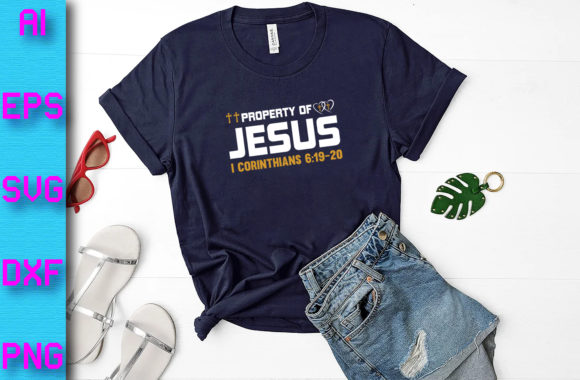
- Place it on real mockups — a t-shirt mockup, a sticker mockup, and a social media frame. See how it reads in context.
- Test print quality — if you are using it for sublimation or screen printing, do a test print on the actual substrate to confirm the rhinestone effect translates well.
- Review file formats — confirm you have both SVG and high-resolution PNG versions. The SVG is essential for scaling and editing in vector software.
- Inspect SVG editability — open the SVG in Illustrator or Inkscape and check that the faceted shapes are individual paths, not a single flattened object. Editable paths give you flexibility to recolor or simplify.
- Compare with font styles — test it alongside serif, sans serif, script, handwritten, and display fonts. See which combinations feel cohesive for your project direction.
- Confirm commercial licensing — this is non-negotiable. Ensure the license covers use in products you sell, whether physical goods like t-shirts or digital products like printable design downloads.
I also recommend checking the resolution of the PNG design file at 300 DPI for print work. If the asset is intended for both print and web, having a high-res PNG along with the SVG saves time and prevents quality issues during production.
How the Asset Serves Different Creators
This design is not just for apparel designers. Print-on-demand sellers can use it across multiple platforms — Redbubble, Printful, Teespring — with minimal adaptation. Cricut users will appreciate the rhinestone-inspired line work for iron-on projects. Etsy product creators can bundle it as part of a faith-based collection. Small business branding specialists can integrate it into a larger system of marketing visuals. Web design professionals might use it as a hero section graphic for a church or ministry website. Content creators and bloggers can feature it in social media posts or Pinterest pins that promote faith-based content.
The versatility stems from the design's strong central subject and the rhinestone texture that reads as both premium and approachable. It does not belong to a single format — it adapts. That is the mark of a useful creative design asset.
Final Thoughts on Professional Use
After working through this review, I would confidently recommend the Jesus Rhinestone T-Shirt Design as a graphic design asset for faith-oriented client projects that need visual impact, emotional resonance, and commercial flexibility. It performs best when treated as a hero element in clean, high-contrast layouts. It requires thoughtful typography pairings and respectful spacing. It rewards designers who test it across formats before committing to a final direction.
For a print-on-demand seller building a consistent brand, for a handmade business owner launching a devotional line, or for a small business branding project that needs a memorable visual anchor, this print template delivers. It is not a background texture or a filler graphic — it is a design that asks to be seen, and that is exactly what a good commercial asset should do.
Add it to your design assets library, test it in your workflow, and use it where the client's story deserves a visual that sparkles with meaning.